CES is the world’s largest technology event, paving the ground for breakthrough technologies and global innovators. This year’s event took place between 9 January – 12th of January, with a number of companies showcasing their newest products during the event.
In this blog, I’m going to summarise some of the technologies Sony announced during the event, as well as summarising how accessible the tech they announced was, while also suggesting ways that I think they could improve.
New Software features / products for creatives
Giving that they’re the owners of Sony Pictures Entertainment, as well as a number of other brands, it was expected that Sony would announce other features that would benefit filmmakers, musicians and content creators, which they definitely did in the end.
An example of a product included in this area was the Alpha 9 Mark 3, as well as a cinematic camera.
The Alpha 9 Mark 3
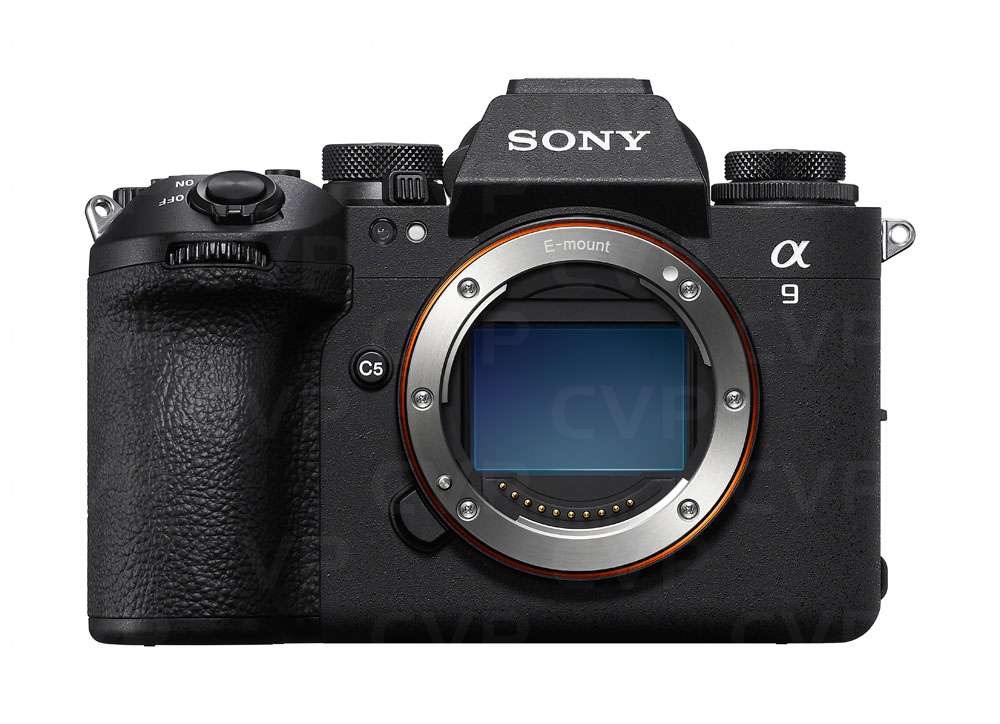
Coming with the world’s first full-frame image sensor with a global shutter system, the Alpha 9 Mark III is capable of capturing fast moving subjects with no image distortion, while also preserving split-second moments in great detail.
As well as this, you’ll also see an improvement in speed and accuracy, which enables the camera to capture decisive moments with ease. It is also capable of shooting continuous bursts at 120 frames per second with full AF/AE tracking, all without viewfinder blackout.
Plus, it also has a highly advanced AI processing unit, which can recognise subjects with astonishingly high precision and reliability!
Beyond this, you are also able to composite RAW Shooting (which can capture multiple images then sync with Sony’s Imaging-Edge Desktop computer software). You can also record 4K movies in either full-frame or Super 35mm formats, focus breathing compensation (which effectively reduces focus breathing when shooting movies), tilt the monitor for enhanced shooting, and customise the camera, thanks to the new front custom button.
But how accessible is the camera if you’re a disabled photographer or filmmaker?
Although the Alpha 9 Mark III camera isn’t an accessibility dream and won’t be accessible enough for all disabled photographers or filmmakers, it does come with a few accessibility features that will make it accessible enough for some, especially for users who are blind or have mild physical disabilities.
One of these includes that Screen Reader function, which will describe what’s on the screen to you. You can access this by going into the Setup tab, then into Accessibility and into Screen Reader. It can be turned on and off by long pressing the Menu button, but after it’s turned on, you can adjust the volume or reading speed of the feature. It supports 10 languages overall.
As well as this, you can also enlarge the text on the screen. However, you can also choose to assign the feature to the C1 button, so it will be easy to access for most users.
Another feature that photographers or filmmakers who require visual assists can take advantage of are the helpful features that make focusing easier, including the Peaking function, which makes it easier to check the subject’s focus onscreen, by enlarging the image and adding colour to the outline of the focused area. But you’ll also be able to use the Focus Map feature which will make differences in the depth of field more clearly visual during movie recording.
Moving on, however, to the Action Assists that come with the camera, there are quite a lot of features to cover, which I’ll outline now.
The Custom Key function lets the user assign a wide range of essential operations to buttons located around the grip, making it easy for people with light physical disabilities to decide which buttons are easier for them to use.
You can also use convenient touch operations to perform several common functions around the camera, with no need to grip the device itself. These functions include the ability to let you focus on a subject, to trip the shutter, and to select a subject for tracking when shooting stills or movies.
You also have the ability to move the 4-axis multi-angle LDC monitor horizontally and vertically, as well as having the option to attach a tripod.
But while this camera does offer good accessibility for people with light physical disabilities and for those who are blind, it isn’t accessible enough for people with more severe disabilities. I personally wouldn’t be able to use the camera due to it only offering customisable buttons around the camera, and for it to become even more accessible, I would need voice activation features to be included, as well as the ability to use third party switches.
I’ll expand on some ideas that I think could help with this in my conclusion to this blog.
Torch Light
There is something else, however, that proves yet again how much Sony cares about creators, and that is the announcement of its new Torch Light feature, which is software that allows filmmakers to create digital scenes prior to principle photography in a hands-on environment, which links virtual environments using Unreal Engine and virtual cameras.
The idea of this sounds good, but where I’m disappointed in it is when it comes to how people will use it. While most people who use it are going to be able-bodied and will have no need to change how it works, the software should still also be accessible to disabled people as well, even if it just includes reprogrammable settings or preferences that will let the user change what buttons do what in the software, especially since so many film companies and sets are dedicated to attracting disabled talent as well.
Sony’a spatial VR Headset with Smart Control Ring
Sony also announced a new Spatial VR Headset which you can use with a smart control ring, that is powered by the Snapdragon XR2 Plus Gen 2 platform, and includes 4K OLED displays.
In a demo shown in their CES conference, it showed users manipulating virtual objects while using two controllers, including a ring and a pointer that fits in the hand.
But while the controllers that are required to use the product may seem groundbreaking to many people, it proves yet again that accessibility is not considered at all when developing virtual reality products, which this product is seriously lacking.
I’ve tried researching into the headset and the ring, but accessibility features sadly don’t seem to be coming up anywhere, so I guess that’s something disabled customers will have to wait to hear more about. But even if the majority of people won’t be using it with accessibility features, there should be features that allow users to use voice controls if that works better for them to add 3D objects to a virtual environment, or if they could even do it by blinking to click on an object and looking in a certain direction to place it there.
Sony’s Afeela Car

Sony’s new Afeela Electric Car is the last thing to be showcased during Sony’s CES conference, but it’s impressive nonetheless.
With highly advanced sensing technology and AI, it is believed to be capable of expanding the possibilities of mobility even further, with countless features that will be bound to make the car your favourite place.
Featuring screens on the back of seats so you can play PS5 games in the car, the ability to customise the digital dashboard and so much more, the car (which is due to be released in 2026) seems to have everything that will make it a gamer’s dream car, but with that much tech, it would be nice if Sony could develop a WAV version as well.
I know customers of Wheelchair Accessible Vehicles wouldn’t probably be the first people in line to purchase a vehicle like this, but there could be various reasons why it would be good to see a WAV version as well. Disabled parents do exist in society, and for years they’ve had to suffer through long car journeys and to kids whining: “Are we there yet?” (Haven’t we all)?
It would therefore be good for WAV versions of this car to be created so that disabled parents and non disabled parents can keep their children entertained on long journeys, but I guess that might be researched into later on.
Overall Thoughts
Part of me is excited for the new technologies that were showcased during Sony’s CES conferences, what users will think of them and how they could improve. However, part of me is also disappointed in how inaccessible the technologies showcased were, with the most accessible thing out of them being a camera that is only accessible to some people in the disabled community but not to all.
In fairness to Sony, they aren’t the only camera manufacturer out there, and while some of the features on their cameras aren’t accessible enough for all disabled customers, they could be seen as an improvement compared to the products that other camera manufacturers offer.
But nevertheless, the accessibility features one of Sony’s most recent cameras has isn’t accessible enough, and there are a couple of ways the Alpha 9 series of cameras — as well as cameras across Sony’s other brands and cameras developed by other brands — could improve.
One of the features I believe could make Sony’s cameras more accessible for physically disabled photographers and filmmakers would be creating a third-party device that users could plug into the camera, with 3.5mm headphone jacks that accessibility switches could be plugged into, which can mimic the buttons they equal on the camera itself. However, something else the staff at Sony could think about developing into their cameras would be including a Voice Control function, which of course GoPro have been featuring in their cameras for years now. If Voice Control was included in new Sony cameras, I would need it to be able to control all aspects of the camera as well, such as zooming in, tilting the touch screen / LCD screen, opening settings, increasing and decreasing brightness and scrolling. But the vast majority of the rest of the camera would be accessible enough if this feature was included, though it would be nice if another option could make the camera accessible as well as this, such as the third-party device I described earlier.
Elsewhere, I would like to see more accessibility settings being included in products or software, whether that be the possibility to add virtual objects into software by setting One Button controls up in software settings, so physically disabled people in creative industries can add stuff with only one click, or the ability to set up eye controls when it comes to being able to use the new Virtual Reality Headset.
I am, however, extremely interested in the upcoming Afella car, and can’t wait until the technology it introduces becomes more mainstream so that it can be implemented into WAVs as well.
So while some of the technology Sony showcased is disappointing due to being inaccessible, they do nonetheless have a large case for being able to improve, and I’m excited for whatever the future holds.

 Phoebs Lyle Tech Reviews